

 Get the app
When a Driver Goes Dark: A Broker’s Playbook
A driver stops answering. The last status update is two hours old, the appointment is this afternoon, and the shipper is going to call any minute now. It feels like the start of a bad day. Most of the time it is not. The overwhelming majority of drivers who go quiet are doing something completely ordinary: parked in a dead zone, asleep on a legally required break, or carrying a phone that died somewhere between stops. The job is not to panic. The job is to work a calm, repeatable sequence that tells you, fast, which kind of silence you are looking at.
This is the operational lost-contact playbook, not the theft article. We keep those separate on purpose, because treating every quiet driver like a crime scene burns goodwill and trains your team to cry wolf. The far more useful skill is running the routine sequence well, so the rare real problem stands out clearly against all the ordinary silence around it. The single biggest upgrade to that sequence is real-time load visibility from LBoard, which replaces the guessing with a live position before you ever pick up the phone.
Why most dark drivers are completely fine
Start from the base rate, because it changes how you read every silent truck. A commercial driver may drive up to 11 hours, then must take 10 consecutive hours off-duty under FMCSA hours-of-service regulations, plus a required 30-minute break inside the driving window. A large share of “unreachable” moments are simply a driver doing exactly what the law requires: resting, off the clock, phone face-down.
Coverage is the other ordinary culprit. Long-haul lanes run through mountain passes, rural interstates, and warehouse districts where a single carrier’s signal drops for thirty or forty miles at a stretch. A driver rolling through one of those gaps is not avoiding you. They are just temporarily off the grid, and they will surface the moment they hit the next tower. Add dead batteries, a phone left in the cab during a long dock wait, and the simple fact that a driver focused on a tight backing maneuver is not going to answer, and you have explained the vast majority of dark windows before theft is even on the table.
Silence is data, not a verdict. The skill is reading what kind of silence it is before you decide what it means.
What to check, in what order
The point of a fixed order is speed and calm. You are not improvising under pressure; you are working a list you have run a hundred times. Most of the time you will get your answer in the first two steps and never touch the rest.
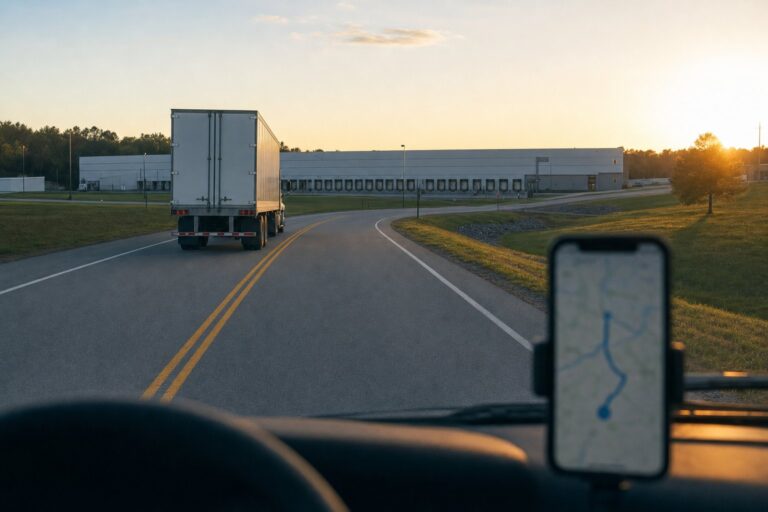
- Check the last known position and timestamp first. Before you call anyone, look at where the load actually is. A tracked position five minutes old moving at highway speed answers the question on its own: the driver is fine and rolling, and there is nothing to escalate. This single step resolves the large majority of dark-driver moments without a phone ever ringing.
- Place one direct call, then stop. Call the driver once and leave a short, specific voicemail with a callback window. Resist the urge to dial five times in ten minutes. A driver on a mandatory break or in a dead zone cannot answer no matter how many times you try, and a wall of missed calls only creates friction when they do surface.
- Send a text or message as a fallback. A text lands when a call cannot, the moment signal returns. Keep it factual: load number, what you need, and by when. Drivers often reply to a quick message far faster than they return a voicemail, and you now have a timestamped record of the outreach.
- Map the silence against the clock and the route. Ask whether the gap makes sense. Is the truck sitting where a break is plausible, or parked in a known no-signal corridor? Has it been quiet for forty minutes or for four hours? A short gap on a rural lane reads completely differently from a long gap in a populated area where coverage is solid.
- Contact the carrier’s dispatch. If direct outreach has not landed, go to the carrier office. Dispatch can often raise their driver on a separate line, confirm a planned stop, or tell you the truck is on a scheduled rest. This is a routine check, not an alarm, and most carriers expect it on a quiet load.
- Document and set a hard recheck time. Note the last position, the steps taken, and the time. Then give it a defined window before the next action rather than refreshing every two minutes. A clear recheck time keeps the situation under control and prevents a benign gap from consuming your whole afternoon.
Run honestly, this sequence resolves nearly every case by step three. Most check-call labor exists because brokers skip the position check and jump straight to dialing, which is the same expensive habit we broke down in the hidden cost of check calls.
When silence is actually normal
It helps to keep a short mental list of the patterns that should not worry you. Recognizing them on sight is what keeps your team from escalating routine gaps into manufactured emergencies.
- The driver is inside a plausible rest window and the last tracked position is parked at a truck stop or rest area.
- The route runs through a known coverage gap, and the gap roughly matches the silence in both length and location.
- The load is sitting at a dock or yard where drivers commonly leave phones in the cab during a long wait.
- The truck was moving normally on its last update and is comfortably ahead of the appointment.
- The gap is short, under an hour, with no deadline pressure and no prior history of problems on the lane.
- The carrier has a clean record with you and a pattern of surfacing on time once they clear a stop.
None of these guarantee everything is fine, but together they describe the situation that produces almost all of your dark windows. When the picture matches this list, the right move is a single message and a recheck time, not a fire drill. For the deeper how-and-why of keeping freight visible end to end, our practical guide to load tracking for brokers covers the full mechanism.
When to actually escalate
Escalation is rare, and it should feel rare. You move past the routine sequence when the silence stops matching any benign explanation. That usually means a long unexplained gap with no rest or coverage reason, a truck that has stopped or diverted somewhere it has no business being, a load with high value or a hard deadline now in jeopardy, or a carrier that cannot raise its own driver either. When two or more of those line up, you stop rechecking and start acting: escalate inside your team, loop in the shipper with a factual heads-up, and follow your security and recovery process. If the pattern points toward something deliberate rather than a missed call, that is a different problem with a different response, which we address in our piece on how cargo theft starts with lost visibility.
The goal is not to escalate faster. It is to escalate accurately, so the one load that truly needs you is not buried under twenty that never did.
How real-time tracking shrinks the dark window
Every step above gets shorter, calmer, and more accurate when you can see the load instead of inferring it. Without live tracking, the dark window is the entire stretch between your last manual check call and your next one, which can be hours. With a live position feed, that window collapses to the gap between location pings, which is minutes. You are no longer reconstructing where a truck might be from a stale status and a hunch.
That difference changes the whole emotional register of a quiet driver. When you can open the load and watch it moving at highway speed, a missed call is a non-event. When you can see it parked at a rest area inside a legal break window, the silence explains itself. You only reach for the phone when the map shows something that does not add up, which is exactly when a call is worth making. Real-time visibility does not just save dialing time; it tells you which silences deserve attention and which to leave alone.
Build the habit, then trust it
A good lost-contact playbook is boring by design. Position first, one call, one message, read the clock and route, then carrier, then a recheck time, with escalation held in reserve for the gaps that genuinely refuse to explain themselves. Run that same order every time and your team stops dreading the dark driver, because they know almost every one of them ends with a truck surfacing exactly where it should be.
The single change that makes the whole playbook faster is seeing the load in real time. Turn on real-time load visibility with LBoard, shrink the dark window from hours to minutes, and let the routine silence stay routine, so your attention is free for the rare load that actually needs it.

Stop checking. Start tracking.
25 loads free. All features. No contract. Go live in minutes.